


Quality Of Life
Sustainability
Cooperation
Economics
YouTube Playlists
This is a group of playlists on our YouTube page that correspond with our mission.
Economy
Work
Automation
Poverty
Cooperatives
Community
Investing
Health
Environment
Education
Our Roles in the Economy
invest money in your own business over which you have control, you have a far greater potential for earning money than you do with a passive investment. Let's say you have a company that sells an imaginary product called a widget. Your widgets produce a profit of fifteen cents for every dollar you have invested. And you sell all of your widgets every two months and then re-invest your money. This is entirely possible with Equanomics. Now let's say the stock market automatically gave you a twelve percent return every year. If that were the case, here is what you could expect to earn over the next five years for every dollar you invest:
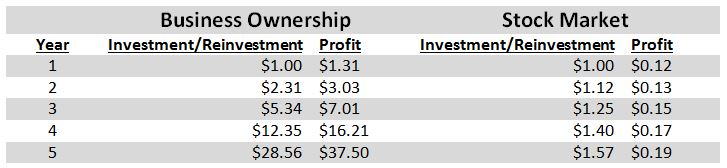
By now, we hope it is clear that you are not looking at a small difference in potential earning power. The same is true about being an employee instead of a business owner. As an employee, our ability to earn is capped. There is only a certain amount an employer is willing to pay for most jobs. A few will rise to the top of their profession but we can’t count on that. You might be able to throw a basketball through a hoop but it doesn’t mean you’re going to be a pro. That is reserved for a very few people. Investing in yourself and owning a business gives you the most control over your financial future.

Key Ideas
Words of Wisdom
"In our time, the curse is monetary illiteracy, just as inability to read plain print was the curse of earlier centuries."
Ezra Pound